Wednesday, 17 November 2021

 Follow us...

🚀Search for new things and conquer the world🇱🇰


📝කළු කුහරය

- ආලෝකය පවා ඇදගන්නා, විශාල ගුරුත්වාකර්ෂණ බලයක් සහිත, කළු පාට ආකාශ වස්තුවක් -

කළු කුහරයක් යනු කිසිදු පදාර්ථයකට මෙන්ම ආලෝකයට පවා පිටවිය නොහැකි අභ්‍යවකාශයේ ප්‍රදේශයකි. එය ඉතාමත් ඝන වූ ස්කන්ධයක් විසින් අවකාශ-කාල විරූපී කිරීමේ ප්‍රතිඵලයකි. කළු කුහරය වටා පවතින්නේ හඳුනා ගත නොහැකි, සිද්ධි ක්ෂිතිජය යනුවෙන් හැඳින්වෙන, නැවත නොපැමිනී‍මේ සීමාව ලකුණු කරන මතුපිටයි. එය කළු ලෙස හඳුන්වන්නේ එය මතට පතිත වන කිසිදු විද්‍යුත් චුම්භක තරංගයක් හෝ අංශුවක් පරාවර්තනය නොකර සම්පූර්ණයෙන් අවශෝෂණය කරගන්නා නිසාය. (තාප ගති විද්‍යාවේ එන කෘෂ්ණ වස්තු (Black Body) වැනිය).[1] ක්වොන්ටම් විද්‍යාවට අනුව කළු කුහර, සීමිත උෂ්ණත්වයකින් යුතු වස්තුවක් මෙන්, හෝකින් කිරණ විහිදුවයි. මෙම උෂ්ණත්වය කළු කුහරයේ ප්‍රමාණය අනුව අඩු වන බැවින් විශාල ස්කන්ධයකින් යුතු කළු කුහර නිරීක්ෂණය කිරීම අපහසුය.එය අදෘශ්‍ය වුවත්, වෙනත් පදාර්ථ සමග සිදුවන අන්තර්ක්‍රියා මගින් කළු කුහර හඳුනාගත හැකිය. අවකාශයේ ප්‍රදේශයක් වටා පරිභ්‍රමණය වන තරු පොකුරක චලන රටා අධ්‍යනය කිරීමෙන් කළු කුහරයක පිහිටීම හඳුනාගත හැකිය. එමෙන්ම, තරු යුග්මයකින් විශාල කළු කුහරයකට පදාර්ථය ඇදගන්නා විට, එම වායු සර්පිලාකිරව හැඩගැසී, අධි උෂ්ණත්වයකට භාජනය වී නිකුත් කරන විකිරණය, ප්‍රථිවි-ගත දුරෙක්ෂක මගින් හඳුනාගත හැක. තාරකා විද්‍යාඥයින් විසින් කළු කුහර තිබිය හැකි ස්ථාන විශාල ප්‍රමාණයක් හඳුනාගෙන ඇති අතර, චක්‍රාවාට ම්‍ධ්‍යයේ supermassive කළු කුහර පැවතිය හැකි බවට සාධක සොයාගෙන ඇත. ක්‍ෂිර පථය මධ්‍යයේ Sagittarius A* ප්‍රදේශ‍යේ, සූර්ය-සකන්ධ මිලියන 2කට අධික සුපිරි-විශාල කළු කුහරයක් (Supermassive Black Hole) පවතින බවට, 1998 වර්ශයේදී, විද්‍යාඥයින් හට ශක්තිමක් සාධක හමුවුනි. නමුත් මෑතකදි කරන ලද පරීක්ෂන වලට අනුව මෙය සූර්ය-සකන්ධ මිලියන 4කට අධික විය යුතු බව සොයාගෙන ඇත.

© From Wikipedia


අභ්‍යාවකාශයේ ගමන් කළ පළමු චීන ගගනගාමිනිය වන්නේ වැංග් යපින්ය. චීනය විසින් ඉඳිකරමින් සිටින් අභ්‍යාවකාශ නැවතුම්පොළක් වන ටියැන්ගොං වෙත සම්බන්ධ ප්‍රධාන මොඩියුලය වන ටියැංහේ සිට මෙයට ඇය සහභාගී විය.

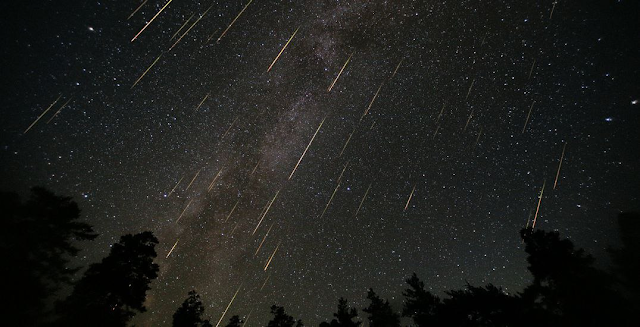
 Leonid Meteor Shower


නොවැම්බර් මස ප්‍රධානම උල්කාපාත වර්ෂාව ලෙස සැලකෙන මෙය සෑම වසරකම නොවැම්බර් 17,18 දිනවල පමණ උපරිම අවස්ථාවට එළඹේ.

මෙහි උල්කාපාත පැමිනෙන්නාක් සේ පෙනෙන ස්ථානය(radiant point) සිංහ රාශිය පසුබිමේ ඇති අතර 55P/Temple-Tuttle වල්ගාතරුව නිසා මෙම උල්කාපාත වර්ෂාව ඇතිවේ. වල්ගාතරුව ගමන් ගන්නා මාර්ගයේ එමගින් විසිරුවා ගිය කුඩා වස්තූන් අතරින් පෘතුවිය ගමන් කිරීමේදී මෙසේ උල්කාපාත වර්ෂා ඇති වන අතර Leonids උල්කාපාත වර්ෂාව සදහා වැදගත් වන Temple-Tuttle වලගාතරුව 1865-66 යන වසර වලදී සොයාගනු ලැබීය.

එහි මධ්‍ය කොටසේ විෂ්කම්භය කිලෝ මීටර 3.6ක්‌ පමණ වෙයි.

උපරිම අවස්ථාවේ පැයකට උල්කා 15ක්‌ පමණ දැකගත හැකි වන අතර මේවා පැයට කිලෝ මීටර 70 ඉක්මවූ වේගයකින් ගමන් කරයි.

වසර 33කට වරක් පමණ leonids උල්කාපාත වර්ෂාවේ උපරිමය පැයකට උල්කාපාත 100කට වඩා වැඩි අවස්ථාවක් දක්වා එළබෙන අතර මෙම අගය සමහරවිට 1000 පමණ දක්වා ද ඉහල යා හැකිය.

එවිට එය Leonid storm ලෙස හදුන්වන අතර දැකිය හැකි උල්කාපාත ප්‍රමාණය නිරීක්ෂණය කරන ස්ථානය මත වෙනස් වේ. 1966දීත් අවසන් වරට 2002 වසරේදීත් දීත් මෙවැනි Leonid storm නිරීක්ෂණය කර ඇත.

Leonids උල්කාපාත වර්ෂාව වඩාත් දීප්තිමත් හා වර්ණවත් උල්කාපාත වර්ෂාවන්ගෙන් එකක් ලෙස සැලකෙන අතර නගර ආලෝකයෙන් පිටත පැහැදිලි අහසක් සහිත ප්‍රදේශයක සිට පහසුවෙන් නැරඹිය හැකිය.

උපරිමය නොවැම්බර් 17 වන දින අලුයම 4ට පමණ නැගෙනහිරින් අංශක 45ක් පමණ ඉහල අහසේදී නිරීක්ෂණය කල හැකියි.


(මෙවැනි නිරීක්ෂණය කිරීම් සදහා නිරීක්ෂණයට පෙර අදුරට ඇස හුරුකර ගැනීම මගින් නිරීක්ෂණය පහසු වනු ඇත)


Friday, 12 November 2021


James webb space telescope (JWST)

දැනට මිනිසා විසින් නිර්මාණය කරන ලද සංකීර්ණතම අභ්‍යවකාශ දුරේක්ෂය විදියට සලකන්නේ මේ දුරේක්ෂය. 1996 වසරේ මේක හදන්න ආරම්භ කරල කිහිප වතාවක්ම දුරේක්ෂය අභ්‍යවකාශ ගත කිරීම කල් ගියා. මේ වෙන විටත් ඩොලර් බිලියන ගණනක් මෙම ව්‍යාපෘතිය සදහා වියදම් කරලා තියෙන්නේ..
වසර ගණනාවක් විවිධ තත්ව යටතේ පරීක්ෂන නිමා කරලා jwst දුරේක්ෂය මේ වසරේ අග භාගයේදී ක්‍රියාත්මක කිරීමට නියමිතව තියෙනවා. පෘතුවියේ ඉදලා කිලෝ මීටර මිලියන 1.5ක්‌ දුරින් තියෙන L2 point එක කියලා හැදින්වෙන සුර්යා වටා කක්ෂ ගත වන ලක්ෂයකට තමයි දුරේක්ෂය යවන්නේ. කිහිප වතාවක්ම පරීක්ෂණ කිරීමට ලක්වුනේ ඒ තරම් දුරකදී ගැටළුවක් ඇති වුනොත් නිවැරදි කිරීම ඉතා අපහසු නිසා.
මේක ඉතාම නවීන උපකරණ තියෙන ගොඩක්ම සංකීර්ණ ඒ වගේම විශාල ව්‍යුහයක්. Telescope එකේ ප්‍රාථමික දර්පනය දැනට අපිට තියෙන හොදම අභ්‍යවකාශ දුරේක්ෂය වෙන හබල් දුරේක්ශයටත් වඩා ඉතාම ලොකුයි. NASA එක වගේම ESA වගේ තව ආයතන කිහිපයක්ම එකතු වෙලා දියත් කරන මේ දුරේක්ෂයේ නිෂ්පාදන කටයුතු කරේ Northrop Grumman සහ 
Ball Aerospace & Technologies කියන ආයතන.
විද්‍යාඥයයෝ ඉංජිනේරුවෝ සහ තවත් විවිධ ක්ෂේත්‍ර වල ඉන්න ගොඩක් දෙනෙක් අවුරුදු ගානක් මහන්සි වෙලා බිලියන ගානක් වියදම් කරලා මේ වගේ project එකක් කරන්නේ ඇයි? ඒකට හේතු ගොඩක් තියෙනවා.
Hubble දුරේක්ෂය විශ්වයේ ඉතාම ඈත තියෙන මන්දාකිනි වල තොරතුරු ගොඩක් අපිට ලබා දීල තියෙනවා. උදාහරණයක් විදියට hubble ultra deep field එක අවුරුදු බිලියන 13කට කලින් විශ්වයේ තිබ්බ මන්දාකිනි වල තත්වය පෙන්නුවා. හරියටම කිව්වොත් big bang එකෙන් අවුරුදු මිලියන සිය ගණනකට පස්සේ තිබුන මන්දාකිනි.ඒත් ඒ විශ්වයේ පලවෙනි මන්දාකිනි නෙවෙයි. එතනින් එහා තියෙන්නේ විශ්වයේ මුලින්ම හැදුන මන්දාකිනි. ඒවා ගොඩක් දුරින් තියෙන නිසා විශාල වශයෙන් රක්ත විස්ථාපනය වෙලා දැන් ඒවගේ තරංග ආයාමය අධෝරක්ත කලාපයේ තමයි තියෙන්නේ. අන්න ඒ නිසා විශ්වයේ මුල්ම මන්දාකිනි වලින් නිකුත් උන ආලෝකය බලාගන්නම විශේෂයෙන් හදපු දුරේක්ෂයක් තමයි james webb space telescope එක. ඊට අමතරව මන්දාකිනි එදා ඉදන් පරිණාමය උන විදිය බලාගන්න, පෘතුවිය වගේ තවත් ග්‍රහලෝක විශ්වයේ තියෙනවද කියලා නිරීක්ෂණය කරන්න /ඒවගේ සංයුතිය මොන වගේද කියලා බලන්න, තවත් ග්‍රහ පද්ධති නිරීක්ෂණය කරන්නත් jwst එකට හැකි වේවි. කලිනුත් කිව්වා වගේම මේක ඉතාම සංකීර්ණ ව්‍යුහයක්. කොටස් ගානක් තියෙනවා.ඒ නිසාම මේක කොටස් කිහිපයකට නවල තමයි L2 point එකට ගෙනියන්නේ.එකට යොදාගන්නේ Ariane 5 ECA කියන රොකට් එක. ප්‍රධාන වශයෙන් දර්පනය, හිරු ආවරණය, විද්‍යාත්මක උපකරණ ඇතුලත් කොටස සහ යානය කියන කොටස් මේකට ඇතුලත් වෙනවා.
ප්‍රථමික දර්පනය(mirror) විෂ්කම්භය මීටර 6.5ක්‌ විතර වෙන එකිනෙකට වෙනස් ෂඩාශ්‍රාකාර කොටස් 18කින් විතර හැදුන කොටසක්. මේක ඉතාම අඩු උෂ්ණත්වයක්‌ තියෙන තැන් වල(ප්ලුටෝ ටත් වඩා අඩු උෂ්ණත්වයක්‌) වැඩ කරන්න පුළුවන් විදියට හදලා තියෙන්නේ රත්‍රන් සහ බෙරිලියම් වලින්. ඒ කොටසට විතරක් කිලෝ ග්‍රෑම් 700ක්‌ විතර ස්කන්ධයක් තියෙනවා. Mirror එක අධෝරක්ත කලාපයේ හොදින් වැඩ කරන්න නම් ඉතාම සංවේදී වෙන්න ඕනි. ඒකට සුර්යගෙන් පෘතුවියේන් සහ චන්ද්‍රයාගෙන් පිටවෙන අධෝරක්ත කිරණ වලින් ආරක්ෂා වෙන්න තමයි හිරු ආවරණයක්(sun shield) තියෙන්නේ. Sun shield එකත් සංකීර්ණයි. Layers කිහිපයක්ම තියෙනවා. හැමවෙලාවෙම දුරේක්ෂය පෘතුවියේ හෙවනැල්ලේ ඉන්න පුළුවන් විදියට තමයි කක්ෂ ගත කරන්නේ.
විද්‍යාත්මක උපකරණ වලින් වැදගත්ම වෙන්නේ near infrared camera, near infrared spectrograph, mid infrared instrument වගේ උපකරණ.
ඉතිං මෙච්චර මහන්සි වෙලා නිර්මාණය කරපු jwst එක මේ මාසේ 12 වෙනිදා French Guiana අභ්‍යවකාශ ගත කිරීමේ මද්‍යස්තානයට ගේනවා.
Jwst අවුරුදු 10ක විතර mission එකක් විදියට තමයි සැලසුම් කරලා තියෙන්නේ.
මේ දුරේක්ෂය අභ්‍යවකාශ ගත කරාට පස්සේ අපිට පුළුවන් වෙයි අවුරුදු බිලියන 13.5කට කලින්, ඒ කියන්නේ මහා පිපුරුමෙන් අවුරුදු මිලියන 200කට වගේ පස්සේ තිබ්බ විශ්වයේ තත්වය බලාගන්න.


ඔබ දන්නවාද?


ඇන්ඩ්‍රොමීඩා චක්‍රාවාටය රාත්‍රී අහසේ පියවී ඇසට පහසුවෙන් නිරීක්ෂණය කල හැකි තරමේ දීප්තියකින් දිස්වූවානම්, එය පසලොස්වක චන්ද්‍රයා මෙන් 6 ගුණයක පමණ විශාලත්වයක් සහිතව නිරීක්ෂණය කල හැකිය.


ඔබ දන්නවාද?


සෞරග්‍රහ මණ්ඩලයේ ඇති ග්‍රහලෝක අතරින් සඳෙහි මෙන් කලා නිරීක්ෂණය කල හැක්කේ බුධ සහ සිකුරු ග්‍රහලෝක වල පමණයි. එය පියවි ඇසට නොපෙනුනත් දුරේක්ෂයක් තුළින් බලන විට ඒවාහි කලා වෙනස් වන ආකාරය පහසුවෙන් නිරීක්ෂණය කල හැකියි. එම ග්‍රහලෝක පෘථිවිය සහ සූර්යයා අතර කක්ෂ ගතවී තිබීම මෙම කලා ඇතිවීමට හේතුවයි.

Wednesday, 21 July 2021


LATEST NEWS
InSight Deploys Its Instruments
Journey to the Center of Mars With the InSight Lander Team

Scientists will talk about new findings in a question-and-answer session with the news media and public.

Scientists working with NASA’s InSight Mars lander will share new results in a virtual discussion at 9 a.m. PDT (12 p.m. EDT) on July 23. Since InSight landed on Mars in November 2018 its seismometer has detected hundreds of quakes. The InSight mission is helping teach scientists how all rocky planets – including Earth – formed.

The discussion will be livestreamed on NASA Television, the NASA app, the agency’s website, and multiple agency social media platforms, including the JPL YouTube and Facebook channels.

Speakers will include the following InSight science team members:

  • Mark Panning, NASA’s Jet Propulsion Laboratory in Southern California
  • Amir Khan, ETH Zurich and University of Zurich
  • Sabine Stanley, Johns Hopkins University

Members of the news media and public can submit questions using the hashtag #ASKNASA.

Earlier this year, the mission was extended for two years, running through December 2022.

Follow the InSight mission on Twitter at @NASAInSight for updates.

More About the Mission

JPL manages InSight for NASA's Science Mission Directorate. InSight is part of NASA's Discovery Program, managed by the agency's Marshall Space Flight Center in Huntsville, Alabama. Lockheed Martin Space in Denver built the InSight spacecraft, including its cruise stage and lander, and supports spacecraft operations for the mission.

A number of European partners, including France's Centre National d'Études Spatiales (CNES) and the German Aerospace Center (DLR), are supporting the InSight mission. CNES provided the Seismic Experiment for Interior Structure (SEIS) instrument to NASA, with the principal investigator at IPGP (Institut de Physique du Globe de Paris). Significant contributions for SEIS came from IPGP; the Max Planck Institute for Solar System Research (MPS) in Germany; the Swiss Federal Institute of Technology (ETH Zurich) in Switzerland; Imperial College London and Oxford University in the United Kingdom; and JPL. DLR provided the Heat Flow and Physical Properties Package (HP3) instrument, with significant contributions from the Space Research Center (CBK) of the Polish Academy of Sciences and Astronika in Poland. Spain's Centro de Astrobiología (CAB) supplied the temperature and wind sensors.

< >


LATEST NEWS
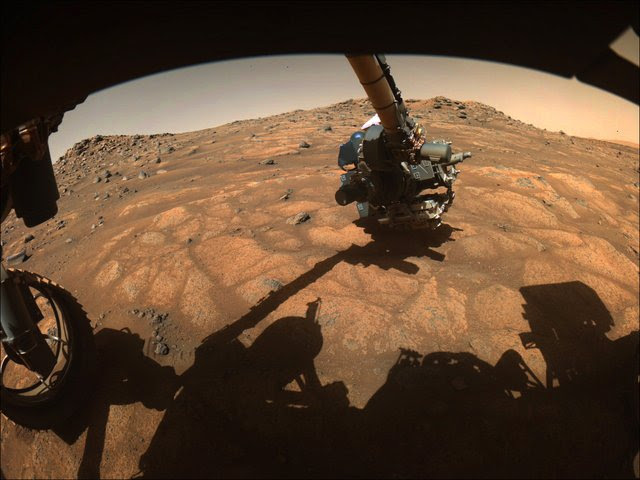
The robotic arm on NASA’s Perseverance rover reached out to examine rocks in an area on Mars nicknamed the “Cratered Floor Fractured Rough” area in this image captured on July 10, 2021 (the 138th sol, or Martian day, of its mission).
Signs of Life on Mars? NASA’s Perseverance Rover Begins the Hunt

After testing a bristling array of instruments on its robotic arm, NASA’s latest Mars rover gets down to business: probing rocks and dust for evidence of past life.

NASA’s Mars 2020 Perseverance rover has begun its search for signs of ancient life on the Red Planet. Flexing its 7-foot (2-meter) mechanical arm, the rover is testing the sensitive detectors it carries, capturing their first science readings. Along with analyzing rocks using X-rays and ultraviolet light, the six-wheeled scientist will zoom in for closeups of tiny segments of rock surfaces that might show evidence of past microbial activity.

Called PIXL, or Planetary Instrument for X-ray Lithochemistry, the rover’s X-ray instrument delivered unexpectedly strong science results while it was still being tested, said Abigail Allwood, PIXL’s principal investigator at NASA’s Jet Propulsion Laboratory in Southern California. Located at the end of the arm, the lunchbox-size instrument fired its X-rays at a small calibration target – used to test instrument settings – aboard Perseverance and was able to determine the composition of Martian dust clinging to the target.

“We got our best-ever composition analysis of Martian dust before it even looked at rock,” Allwood said.

That’s just a small taste of what PIXL, combined with the arm’s other instruments, is expected to reveal as it zeroes in on promising geological features over the weeks and months ahead.

Scientists say Jezero Crater was a crater lake billions of years ago, making it a choice landing site for Perseverance. The crater has long since dried out, and the rover is now picking its way across its red, broken floor.

“If life was there in Jezero Crater, the evidence of that life could be there,” said Allwood, a key member of the Perseverance “arm science” team.

To get a detailed profile of rock textures, contours, and composition, PIXL’s maps of the chemicals throughout a rock can be combined with mineral maps produced by the SHERLOC instrument and its partner, WATSON. SHERLOC – short for Scanning Habitable Environments with Raman & Luminescence for Organics & Chemicals – uses an ultraviolet laser to identify some of the minerals in the rock, while WATSON takes closeup images that scientists can use to determine grain size, roundness, and texture, all of which can help determine how the rock was formed.

Early WATSON closeups have already yielded a trove of data from Martian rocks, the scientists said, such as a variety of colors, sizes of grains in the sediment, and even the presence of “cement” between the grains. Such details can provide important clues about formation history, water flow, and ancient, potentially habitable Martian environments. And combined with those from PIXL, they can provide a broader environmental and even historical snapshot of Jezero Crater.

“What is the crater floor made out of? What were the conditions like on the crater floor?” asks Luther Beegle of JPL, SHERLOC’s principal investigator. “That does tell us a lot about the early days of Mars, and potentially how Mars formed. If we have an idea of what the history of Mars is like, we’ll be able to understand the potential for finding evidence of life.”

The Science Team

While the rover has significant autonomous capabilities, such as driving itself across the Martian landscape, hundreds of earthbound scientists are still involved in analyzing results and planning further investigations.

“There are almost 500 people on the science team,” Beegle said. “The number of participants in any given action by the rover is on the order of 100. It’s great to see these scientists come to agreement in analyzing the clues, prioritizing each step, and putting together the pieces of the Jezero science puzzle.”

That will be critical when the Mars 2020 Perseverance rover collects its first samples for eventual return to Earth. They’ll be sealed in superclean metallic tubes on the Martian surface so that a future mission could collect them and send back to the home planet for further analysis.

Despite decades of investigation on the question of potential life, the Red Planet has stubbornly kept its secrets.

“Mars 2020, in my view, is the best opportunity we will have in our lifetime to address that question,” said Kenneth Williford, the deputy project scientist for Perseverance.

The geological details are critical, Allwood said, to place any indication of possible life in context, and to check scientists’ ideas about how a second example of life’s origin could come about.

Combined with other instruments on the rover, the detectors on the arm, including SHERLOC and WATSON, could make humanity’s first discovery of life beyond Earth.

More About the Mission

A key objective for Perseverance’s mission on Mars is astrobiology, including the search for signs of ancient microbial life. The rover will characterize the planet’s geology and past climate, pave the way for human exploration of the Red Planet, and be the first mission to collect and cache Martian rock and regolith (broken rock and dust).

Subsequent NASA missions, in cooperation with ESA (European Space Agency), would send spacecraft to Mars to collect these sealed samples from the surface and return them to Earth for in-depth analysis.

The Mars 2020 Perseverance mission is part of NASA’s Moon to Mars exploration approach, which includes Artemis missions to the Moon that will help prepare for human exploration of the Red Planet.

JPL, which is managed for NASA by Caltech in Pasadena, California, built and manages operations of the Perseverance rover.

For more about Perseverance:

mars.nasa.gov/mars2020/

and

nasa.gov/perseverance

Tuesday, 20 July 2021


Information about the Space Flight of Jeff Bezos (https://www.youtube.com/watch?v=ZlP2JA4DbBA)


ලොව ධනවත්ම පුද්ගලයා වන ජෙෆ් බෙසෝස් අද දින තමාගේම රොකට්ටුවක නැගී අභ්‍යවකාශය කරා ගමන් කිරීමට නියමිතයි. ඒ වගේම ඔහුත් සමග ලොව ලාබාලතම සහ වයස්ගතම අවකාශගාමීන් දෙදෙනාද ගමන් කරනු ඇති. මෙලෙස සුවිශේෂී මෙම අභ්‍යවකාශ ගමන ගැන මෙයින් විස්තර වනවා. Jeff Bezos space flight. blue origin. new shepherd. human space flight. going to space. SpaceX. virgin galactic. Blue origin. astronomy sinhala. science sinhala. sinhala science video. physics sinhala. vishwaya sinhalen. #astronomysinhala #sciencesinhala #educationsinhala #physicssinhala


Credit should go to,

Virgin Galactic

Blue Origin

----------------

You can save this video with our new @download_it_bot (https://t.me/download_it_bot?start=aximobot_caption)

Thursday, 15 July 2021


LATEST NEWS
Image of Jupiter's moon, Ganymede

Ride With Juno As It Flies Past the Solar System’s Biggest Moon and Jupiter

The probe flew closer to Jupiter's largest moon, Ganymede, than any other spacecraft in more than two decades, offering dramatic glimpses of both the icy orb and the gas giant.

On June 7, 2021, NASA’s Juno spacecraft flew closer to Jupiter’s ice-encrusted moon Ganymede than any spacecraft in more than two decades. Less than a day later, Juno made its 34th flyby of Jupiter, racing over its roiling atmosphere from pole to pole in less than three hours. Using the spacecraft’s JunoCam imager, the mission team has put together this animation to provide a “starship captain” point of view of each flyby.

“The animation shows just how beautiful deep space exploration can be,” said Scott Bolton, principal investigator for Juno from the Southwest Research Institute in San Antonio. “The animation is a way for people to imagine exploring our solar system firsthand by seeing what it would be like to be orbiting Jupiter and flying past one of its icy moons. Today, as we approach the exciting prospect of humans being able to visit space in orbit around Earth, this propels our imagination decades into the future, when humans will be visiting the alien worlds in our solar system.”

The 3:30-minute-long animation begins with Juno approaching Ganymede, passing within 645 miles (1,038 kilometers) of the surface at a relative velocity of 41,600 mph (67,000 kph). The imagery shows several of the moon’s dark and light regions (darker regions are believed to result from ice sublimating into the surrounding vacuum, leaving behind darkened residue) as well as the crater Tros, which is among the largest and brightest crater scars on Ganymede.

It takes just 14 hours, 50 minutes for Juno to travel the 735,000 miles (1.18 million kilometers) between Ganymede and Jupiter, and the viewer is transported to within just 2,100 miles (3,400 kilometers) above Jupiter’s spectacular cloud tops. By that point, Jupiter’s powerful gravity has accelerated the spacecraft to almost 130,000 mph (210,000 kph) relative to the planet.

Among the Jovian atmospheric features that can be seen are the circumpolar cyclones at the north pole and five of the gas giant’s “string of pearls” – eight massive storms rotating counterclockwise in the southern hemisphere that appear as white ovals. Using information that Juno has learned from studying Jupiter’s atmosphere, the animation team simulated lightning one might see as we pass over Jupiter’s giant thunderstorms.

The camera’s point of view for this time-lapse animation was generated by citizen scientist Gerald Eichstädt, using composite images of Ganymede and Jupiter. For both worlds, the JunoCam images were orthographically projected onto a digital sphere, and then synthetic frames were added between actual images to make the motion appear smoother and provide views of approach and departure for both Ganymede and Jupiter.

As planned, the gravitational pull of the giant moon has affected Juno’s orbit, resulting in the reduction of its orbital period from 53 days to 43 days. The next flyby of Jupiter, the 35th of the mission, is scheduled for July 21.

More About the Mission

JPL, a division of Caltech in Pasadena, California, manages the Juno mission for the principal investigator, Scott J. Bolton, of the Southwest Research Institute in San Antonio. Juno is part of NASA’s New Frontiers Program, which is managed at NASA’s Marshall Space Flight Center in Huntsville, Alabama, for the agency’s Science Mission Directorate in Washington. Lockheed Martin Space in Denver built and operates the spacecraft.

More information about Juno is available at:

https://www.nasa.gov/juno

https://www.missionjuno.swri.edu

Follow the mission on Facebook and Twitter at:

https://www.facebook.com/NASASolarSystem

https://www.twitter.com/NASASolarSystem

 India's #Chandrayaan3 becomes the first spacecraft to land near the south pole of the Moon! India is now the 4th country to land a spac...